
Adjective Salad
Sounding important versus providing value

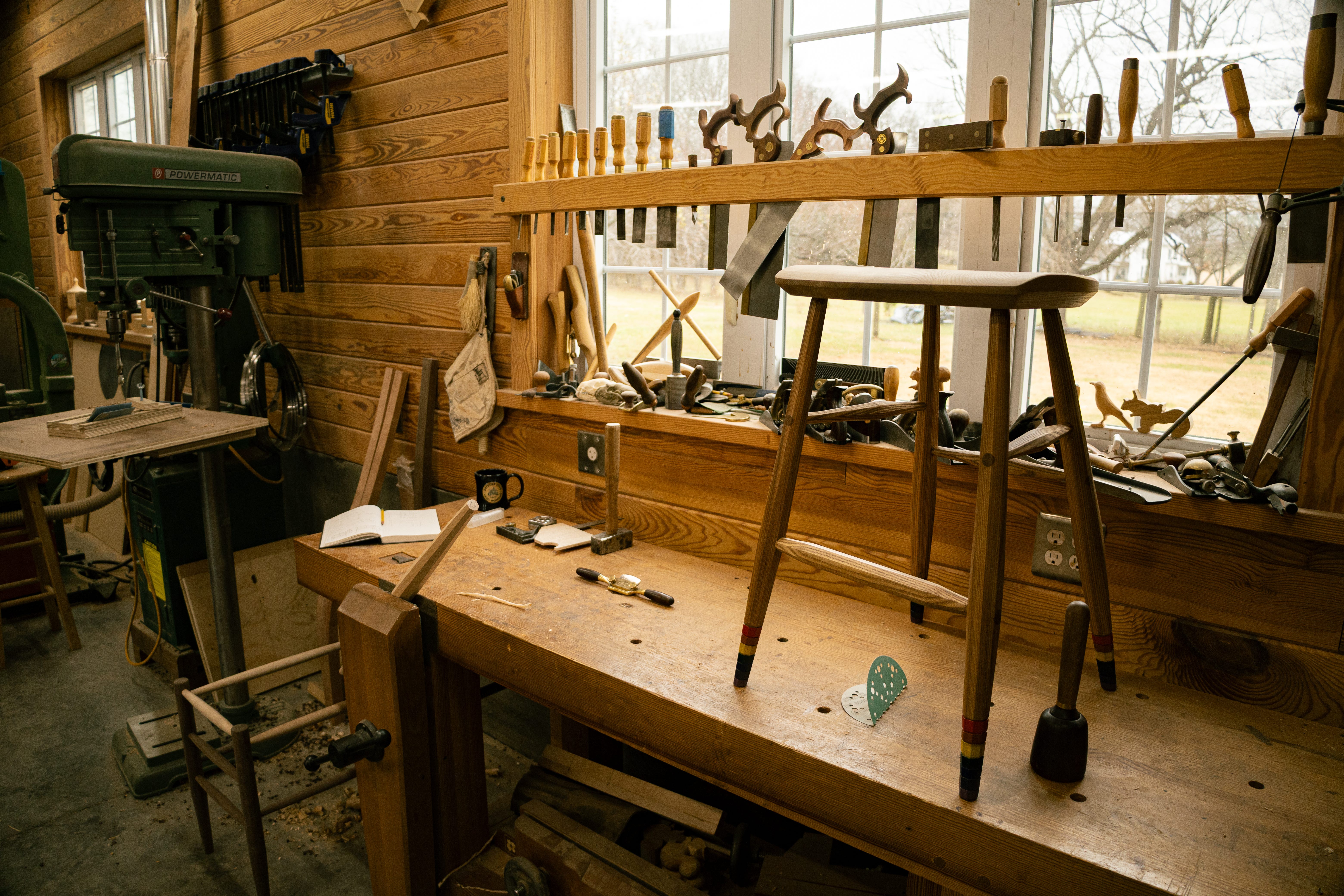
When I was about 13 yrs old, a fine home contractor my brother worked for (who had a background in furniture building) was talking to me about hand planes. Somewhere in the conversation he said something to the effect:
“To become a fine craftsman you first have to learn how to talk like one. Then you learn to do good work. Then through the work you become experienced.”
I never forgot this and as a middle school boy I took it as a cautionary tale that doing the work is more valuable than words. So I quit trying to sound important and worried about doing the work.
There was also an academic undertow pulling me towards thrift with words, I was homeschooled. And my journalist mother was fanatical about thrift. I would write a 4 page essay and she would give it back and say “you took 4 pages to say what could be said in 1” (she would probably say the same about this essay).
With this background I’ve never been able to submit anything to a gallery or show. I upload the photos and then they ask for a 300 word artist statement and I freeze. Some of this is self doubt but really it’s not being able to write an adjective salad. What is an adjective salad? An adjective salad uses lots of describing words that sounds pretty but when you eat them you walk away hungry. Hungry in the sense you have no better understanding or knowledge than before. Or it may take more computing power to interpret than what it provides.
“My table invites thoughtful engagement, revealing layers of meaning through careful observation and an appreciation for conceptual and material nuance.”
Interpretation: Let’s pretend my table has a deep spiritual meaning that gives you warm fuzzy feelings.
“In my work I embrace the unique textured character of the material to allow the material’s voice space in the telling of the story.”
Interpretation: I leave sawmill marks on my boards.
“My piece embraces the workmanship of risk, focusing on developing fine craft through the pureness of simplicity by using timeless methods that have stood through the ceanturies.”
Interpretation: I use all hand tools in my work and I think I’m better than you.
An early indicator of adjective salad is if you walk away from reading or from talking to an individual and some of the following are true.
You feel inferior, like you are not part of the club.
You feel confused
Your specific question was answered in an unclear way
You feel less informed than before
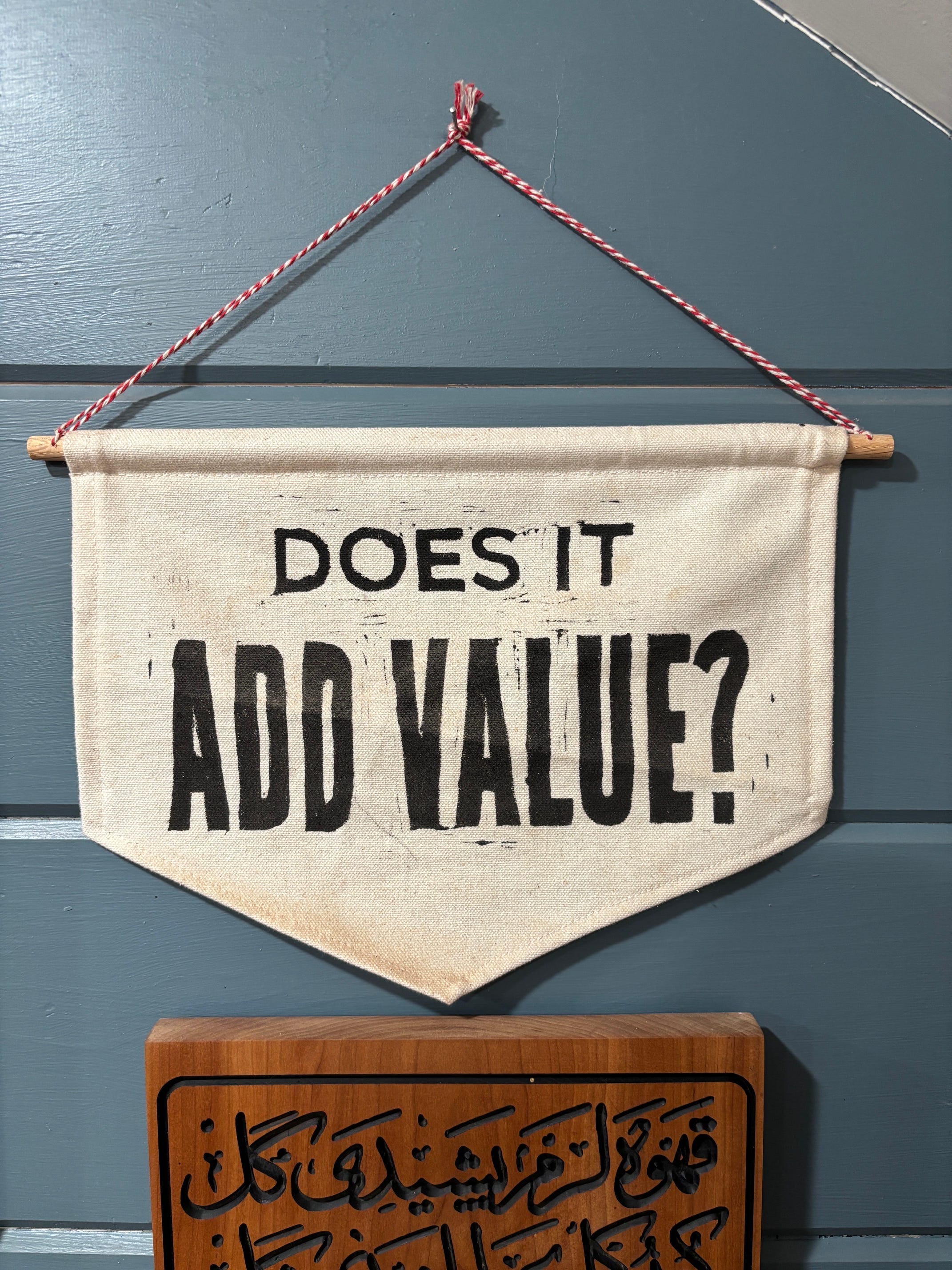
I have a block print art in my office that says “does it add value?” I reference this a lot. Not in the capitalist sense but in a holistic one. So I ask the question; what do I want people to feel when they walk away from reading my work or speaking with me?
To feel valuable
To have more clarity
To be inspired
To be encourage
To have more knowledge
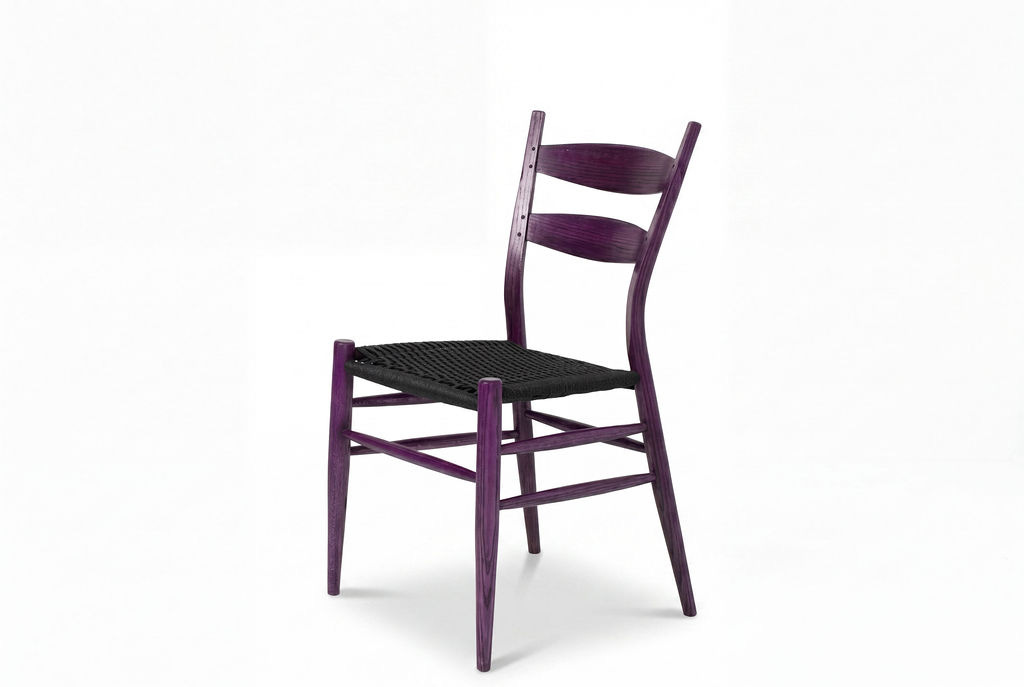
So what is my hope in all of this? My hope is that we can all be a little less pretentious. That we can place a little more value on doing the work than on pretty words and posturing. Because sometimes what inspired the piece is simply that I like the color purple and no more words are needed.
As savage and problematic as Hemingway was, I've always liked his rules for writing. As well the U.S. military emphasizes writing for 8th grade level comprehension. The joke is because that's how smart people in the service are, but it's more about removing misunderstanding by cutting to what matters.
I knew there's a reason I liked you. You smart goodly.
Beautifully and concisely said.