
Judging Gravity
Establishing a baseline for Ailanthus moisture content

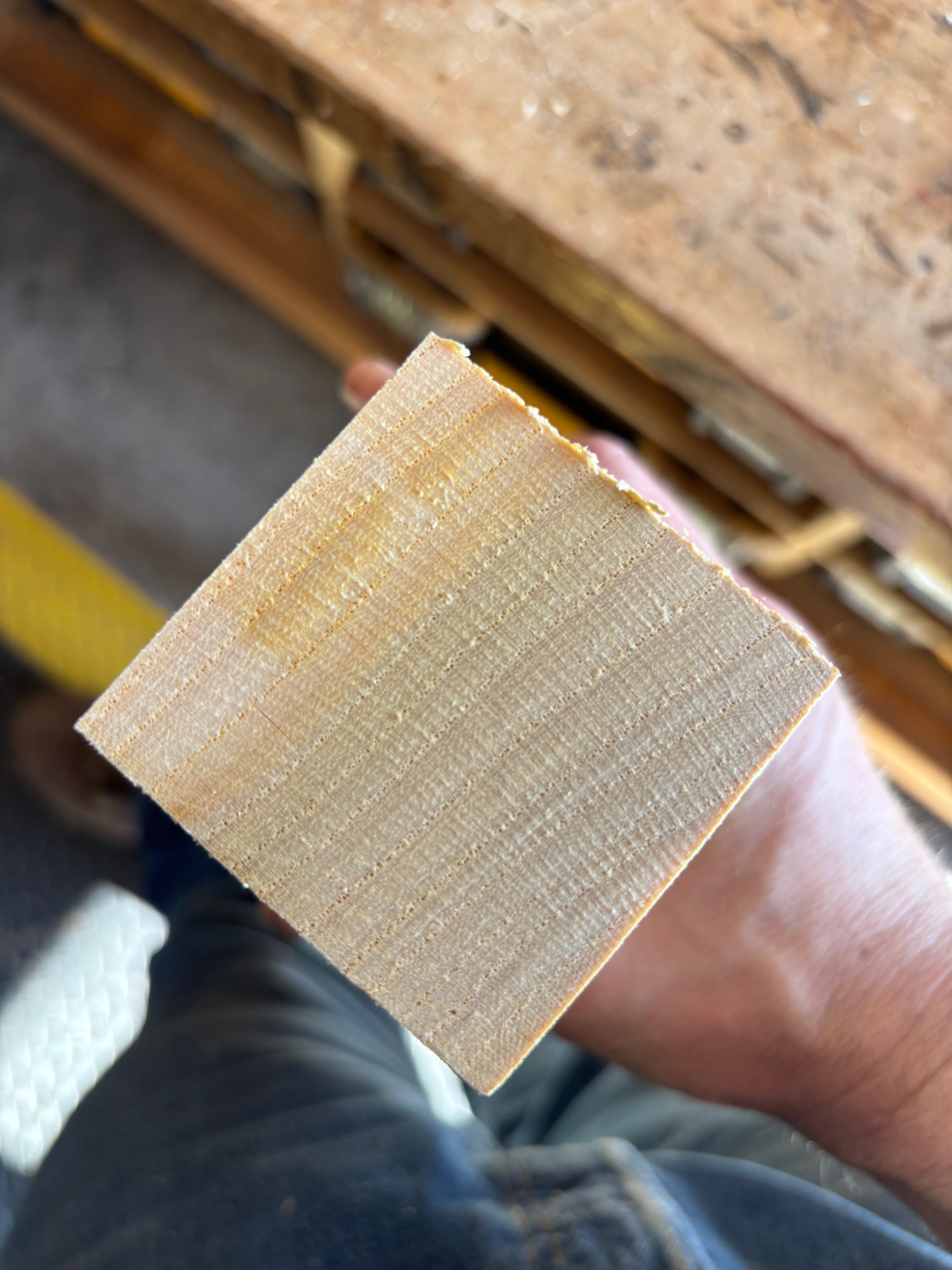
Yesterday I pulled a board sample from the Ailanthus for some testing. Being a disregarded species one issue is it does not appear in standard charts for things like moisture meter settings and kiln schedules. Because I am going to both steam bend airdried parts and kiln dry the rest I need to be able to monitor the moisture content (MC) to determine when it’s a good range to steam bend so I can pull material for bending and kiln dry the rest.
When wood is sawn green from the log the moisture content in some species (for example Eastern White Pine) can be as much as 100% water. Which means the weight of the water exceeds the weight of the wood fibers themselves. This water is made up of both; “free water” which will be lost quite easily by evaporating off the surface and “bound water” which the wood molecules have bound in their structure and will require heat to evaporate off. When we saw that log into boards we’ve severed the fibers and exposed large surface areas of the material to the air so it begins to lose that free water through evaporation. As the free water is slowly lost the wood decreases in water and approaches its fiber saturation point or FSP this is the point that the wood fibers are completely saturated with water. For most species the FSP is somewhere around 30% water weight. Once you drop below FSP the wood begins to shrink and change dimension as the fibers dry out. The majority of this shrinkage and dimension change happens when the material drops from FSP to 20% this is when most defects like end checks, honey comb, surface checks and other drying defects happen. As you drop below 20% the rate of shrinkage is much less and the risk of new drying defects forming is much less.
For this reason an ideal moisture content for steam bending is 16%-20% this is when the wood is still wet so that fibers are not brittle but the risk of the bent part deforming as it dries has been mostly avoided. Albeit even kiln dried wood can be steam bent ( I do so regularly) I’m looking to monitor the Ailanthus moisture content to pull my bending stock in that 16-20% range.
For monitoring moisture like this in a bundle I use a Wagner 910 pinless meter which uses a specific gravity (SG) setting to determine the moisture. You set the meter to the species specific gravity (SG when dry) and go about your testing. But I could not find a firm SG for Ailanthus so I did the bucket test.
The bucket test is basically putting a sample in a bucket of water and determining what percentage of the sample is below the water line when the sample is at buoyancy.
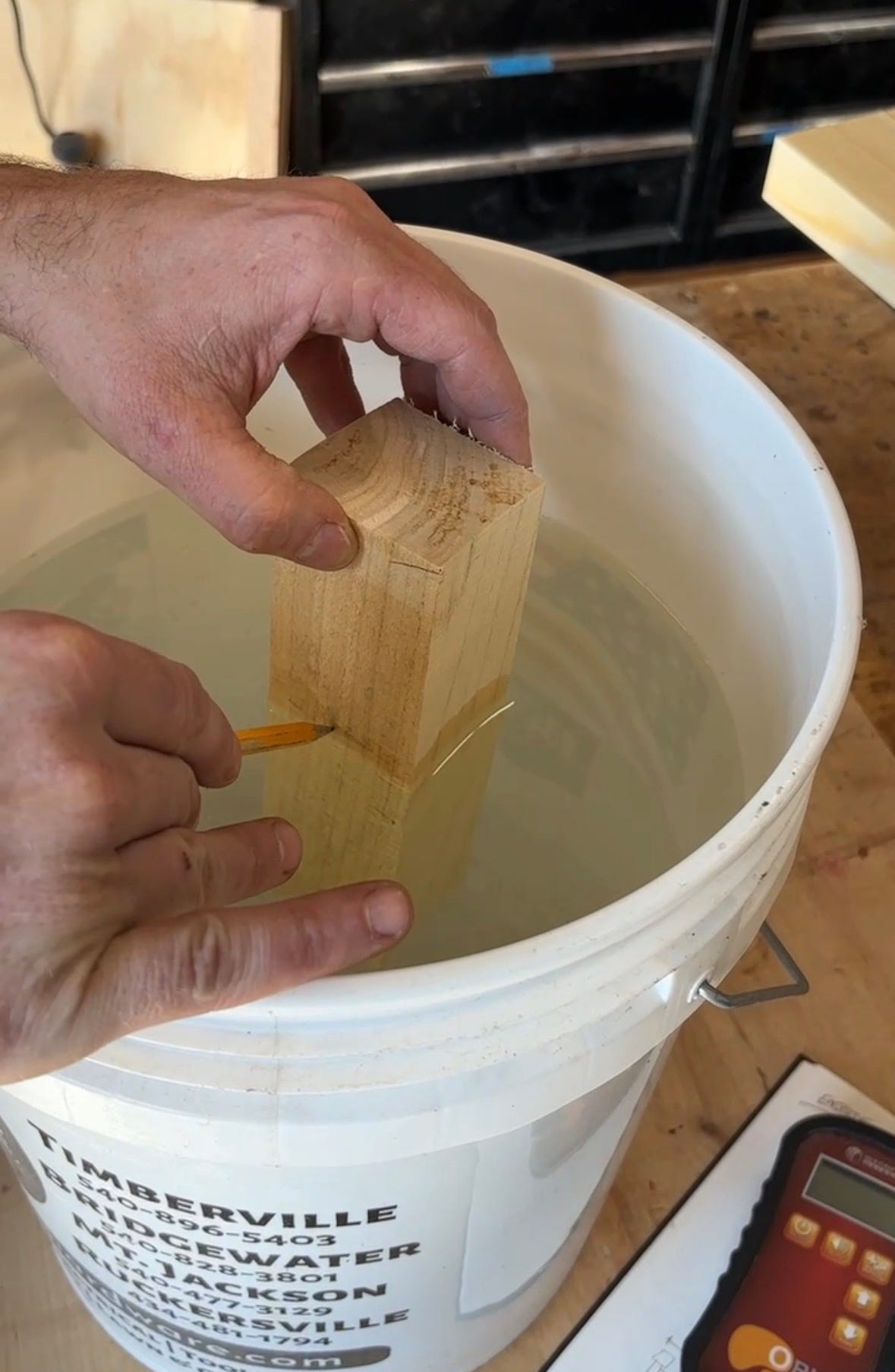
I start with a 10” long sample and insert it into a bucket of water slowly lowering it into the water lengthwise (vertically). Being careful not to exert any upward or downward pressure on the sample; lowering until the sample feels weightless (the buoyant force of the water is equal to the weight of the displaced sample). I then make a mark on the water line.
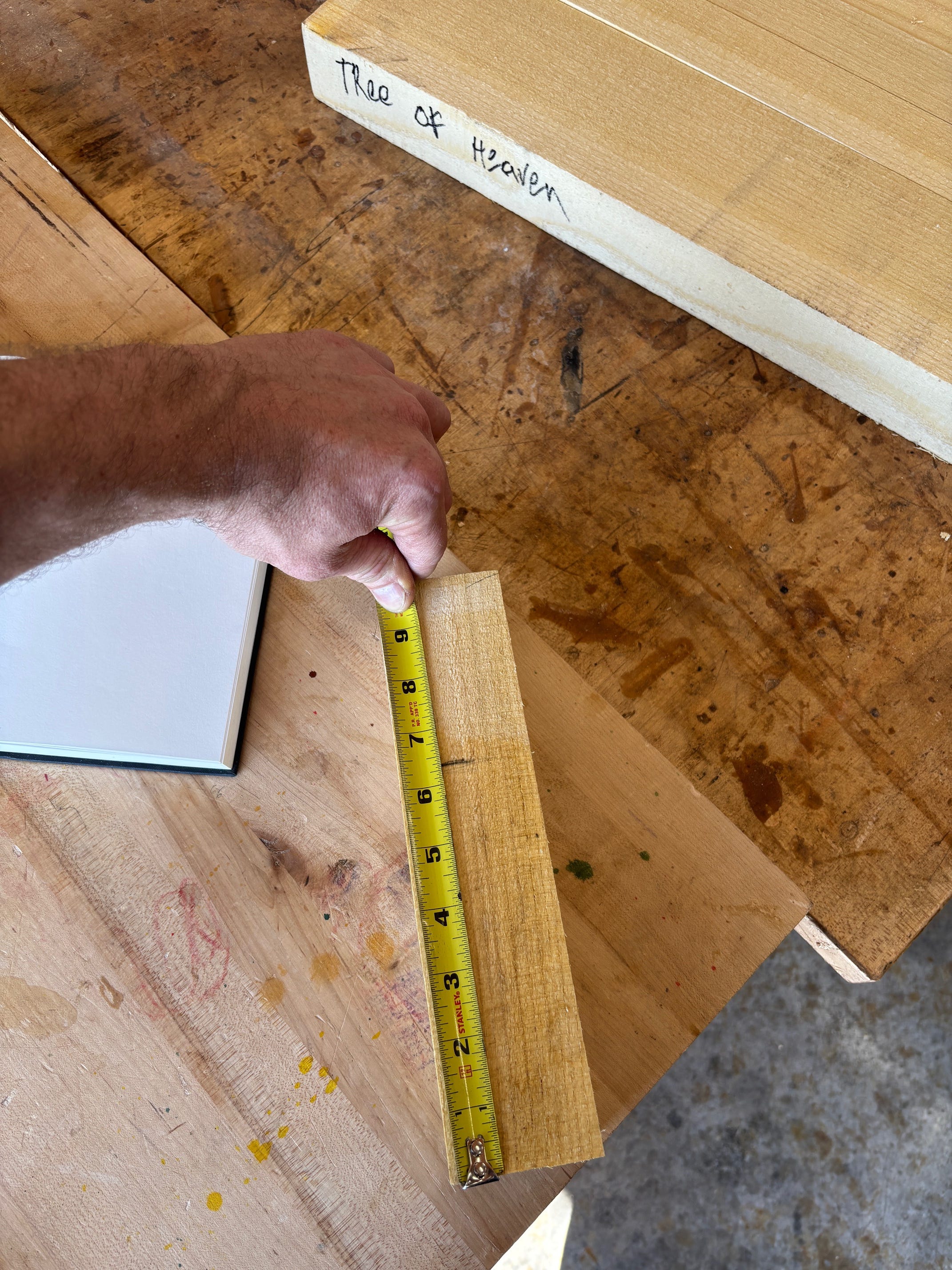
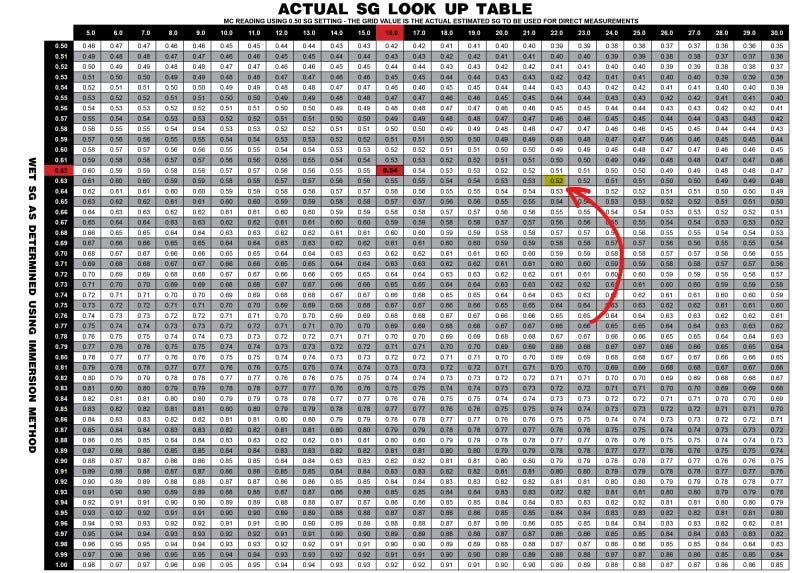
Then I measure the length of the sample portion below the waterline and divide it by the total length of the sample which gave me .6376 this tells me that Ailanthus wet has a specific gravity of 0.63. I then set my moisture meter to 0.50 SG and test the MC and use a conversion chart from Wagner to convert that to a dry specific gravity which is 0.52. Now I can set my moisture meter to 0.52 and confidently check the MC of the Ailanthus.
Unfortunately the material was still too wet to steam bend. But being the impatient person I am I went ahead and cut parts out oversized and sealed the end grain. Breaking down the material closer to finished size increases the surface area and allows it to lose that free water more quickly. These oversize parts should now be ready to bend here in a couple of weeks whereas if left in the bundle it could be another month or two.
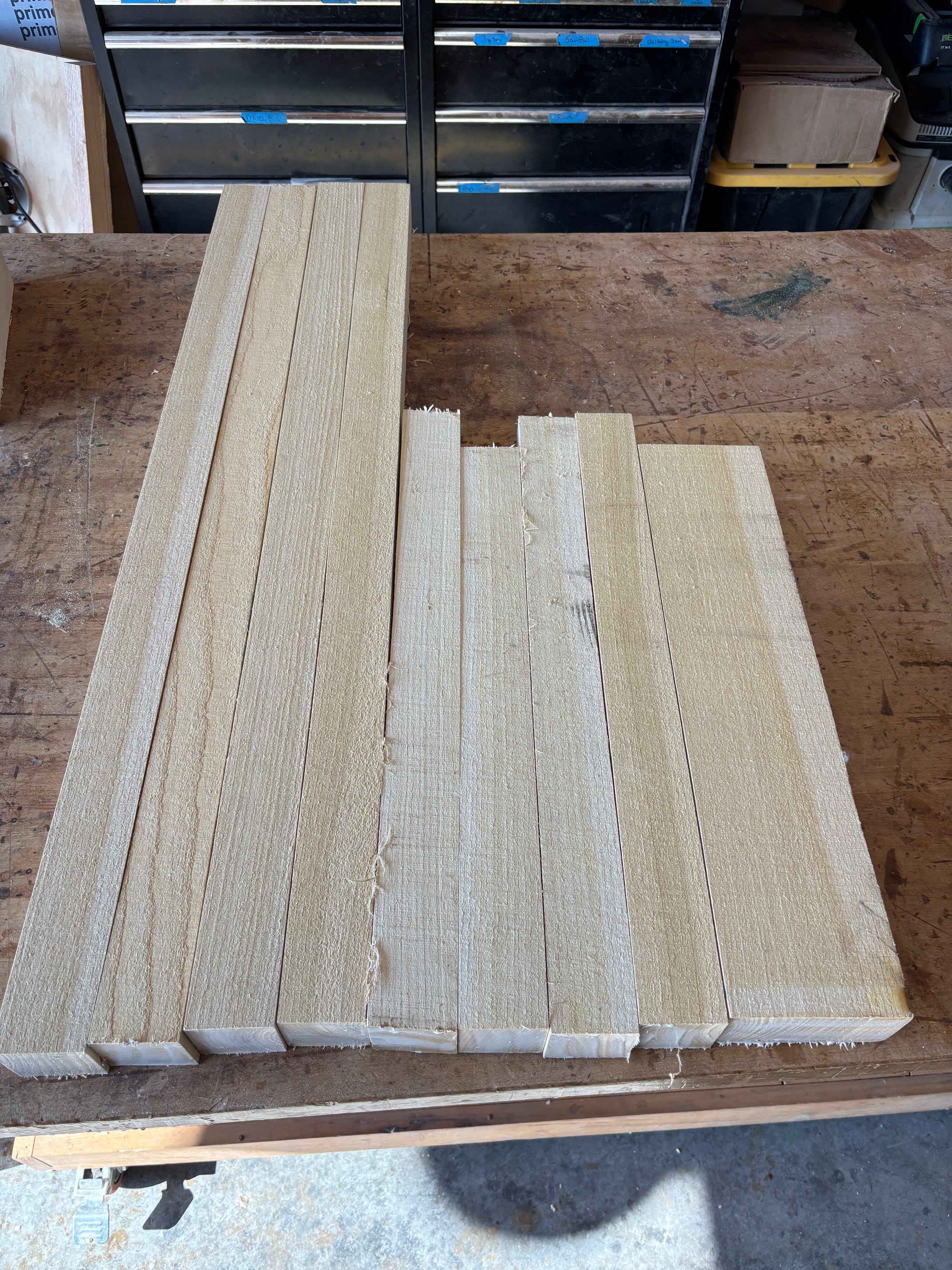
I have gotten a lot of comments asking about the smell of the material. The tree is known for a pungent smell that’s rather off putting. So far once in board form the smell of the material when sawing it is not pungent at all and I would say the smell has a striking resemblance to the smell of Poplar.
I learn so much more about wood from you! I admittedly don’t know a lot about the drying process so these blogs are great. 👍
If I interpret this correctly, I have learned a new concept. The moisture % measurement can go to 100%? meaning 50% of the total weight of the wet log? This then means that a 20% moisture measured log has a total water weight of 10% of the weight of the log? Is this right?