
Spilling the tea
Sassafras tea

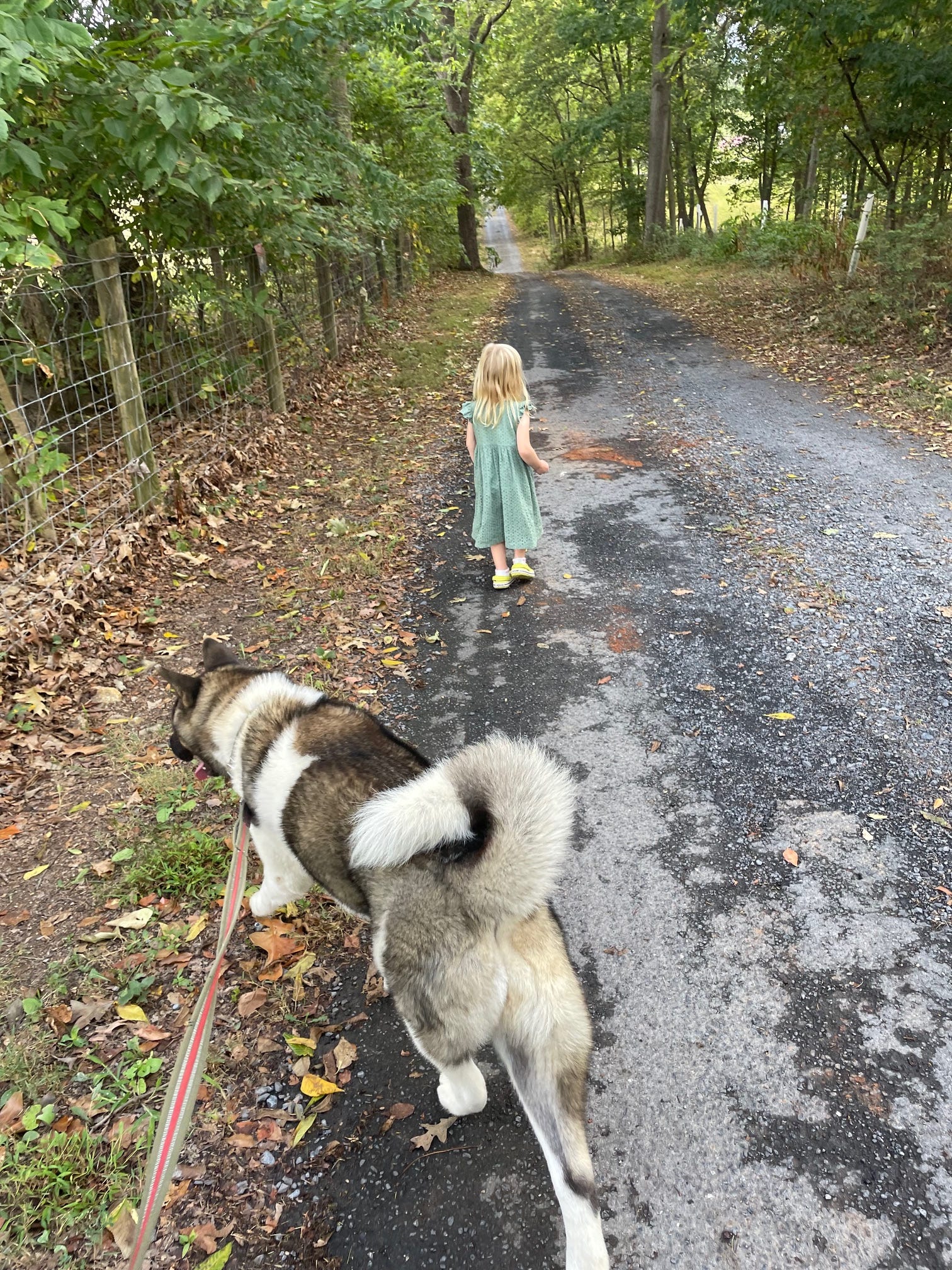
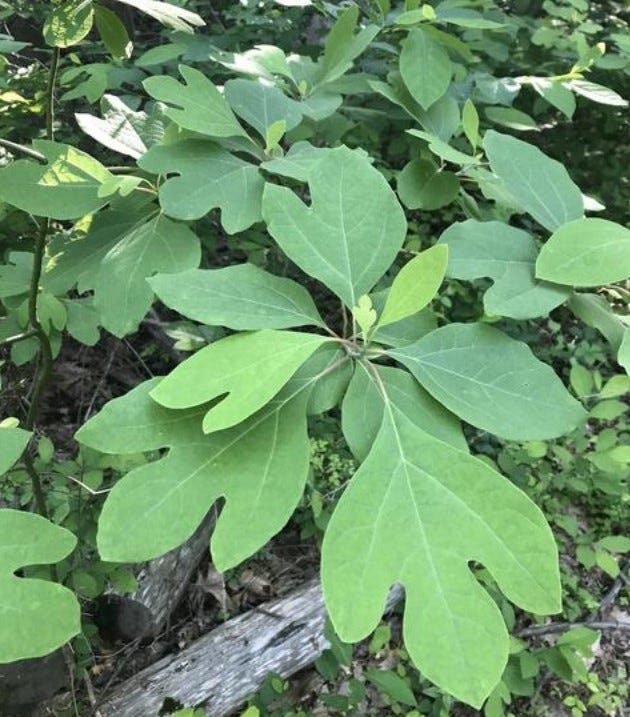
When I was a child my mother would take us on walks in the woods. These were not ordinary strolls but nature immersion walks. My mother was an herbalist (yes there is university level medicinal plant certificate training for such things) who made salves, tinctures and other food or medicinal items from the local flora. Consequently I can identify more trees and plants than sports jerseys and if we go on hike together I’m likely to pick a snack along the trail. One of my childhood treats was sassafras tea, a deep red, sweet, sticky tea with a strong bitter edged flavor. These trees (Sassafras albidum) are an understory species that in my area of Appalachia are often found among Mountain laurel and chestnut oak peaking up around the May apples, but rarely a very large tree. If given enough sunlight though they can grow quite large. The tree has a high concentration of Safrole, an oily antifeedant that gives the tree a bitter sweet fragrance. When the trees approach a size large enough to saw for timber they are very prone to laurel wilt which can cause rot pockets inside the tree or leave it with bacterial infections that make the lumber difficult to dry.
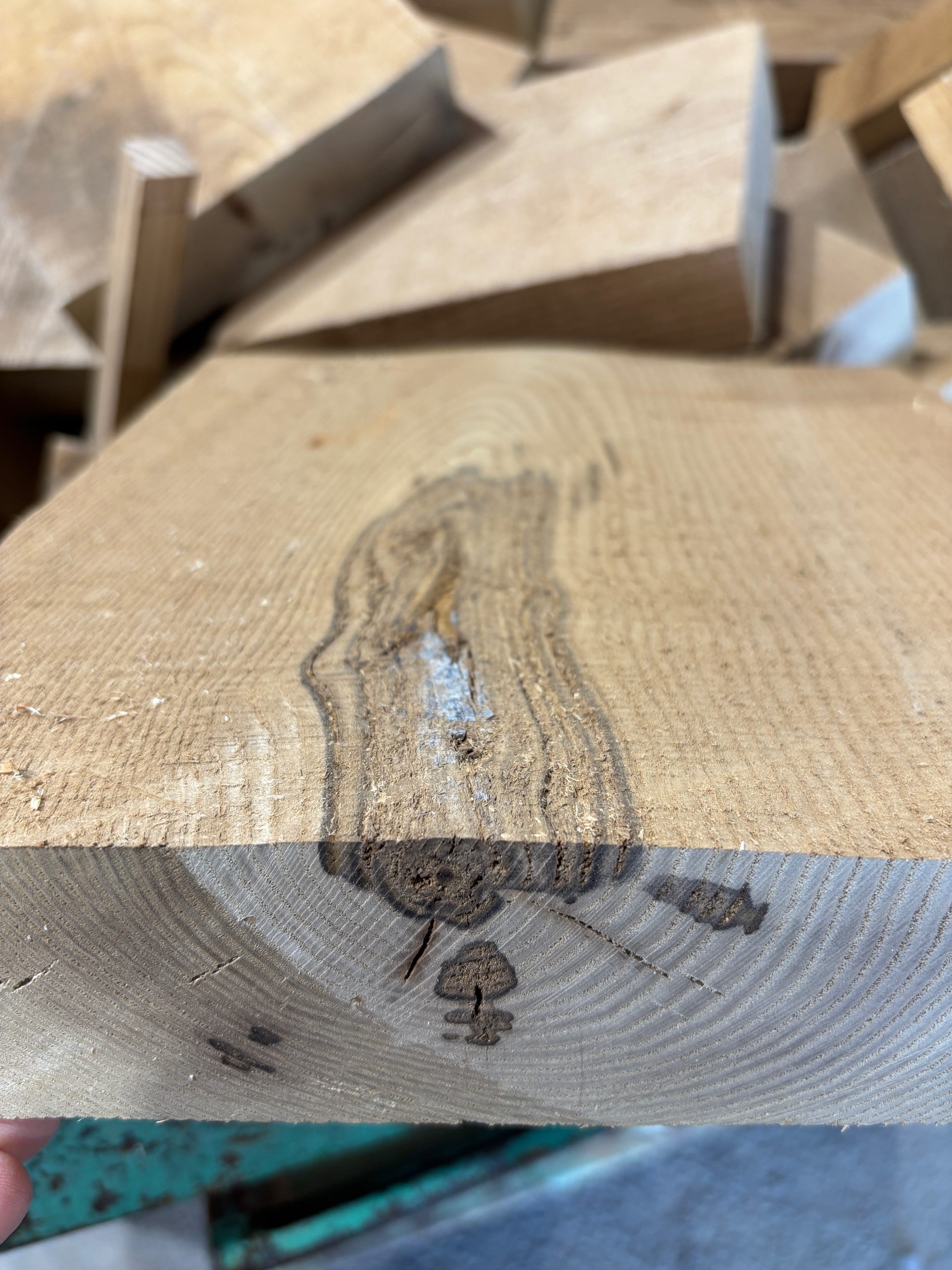
Surprisingly though the boards are very rot resistant and make a superior outdoor material prized for decking and siding.
The lumber is ring porous like oak or ash but has no visible medullary rays. It is soft, just slightly softer than southern yellow pine making it easy to carve with a gorgeous chestnut brown color. In fact it is the closest thing to working the extinct American chestnut in terms of appearance and how the material works.
Sassafras is not a common material to see in the lumberyard. Its not a high density species, the trees don’t often grow large enough to saw and when they do there is often bacteria issues that make sawing and drying thick 8/4 stock very difficult.
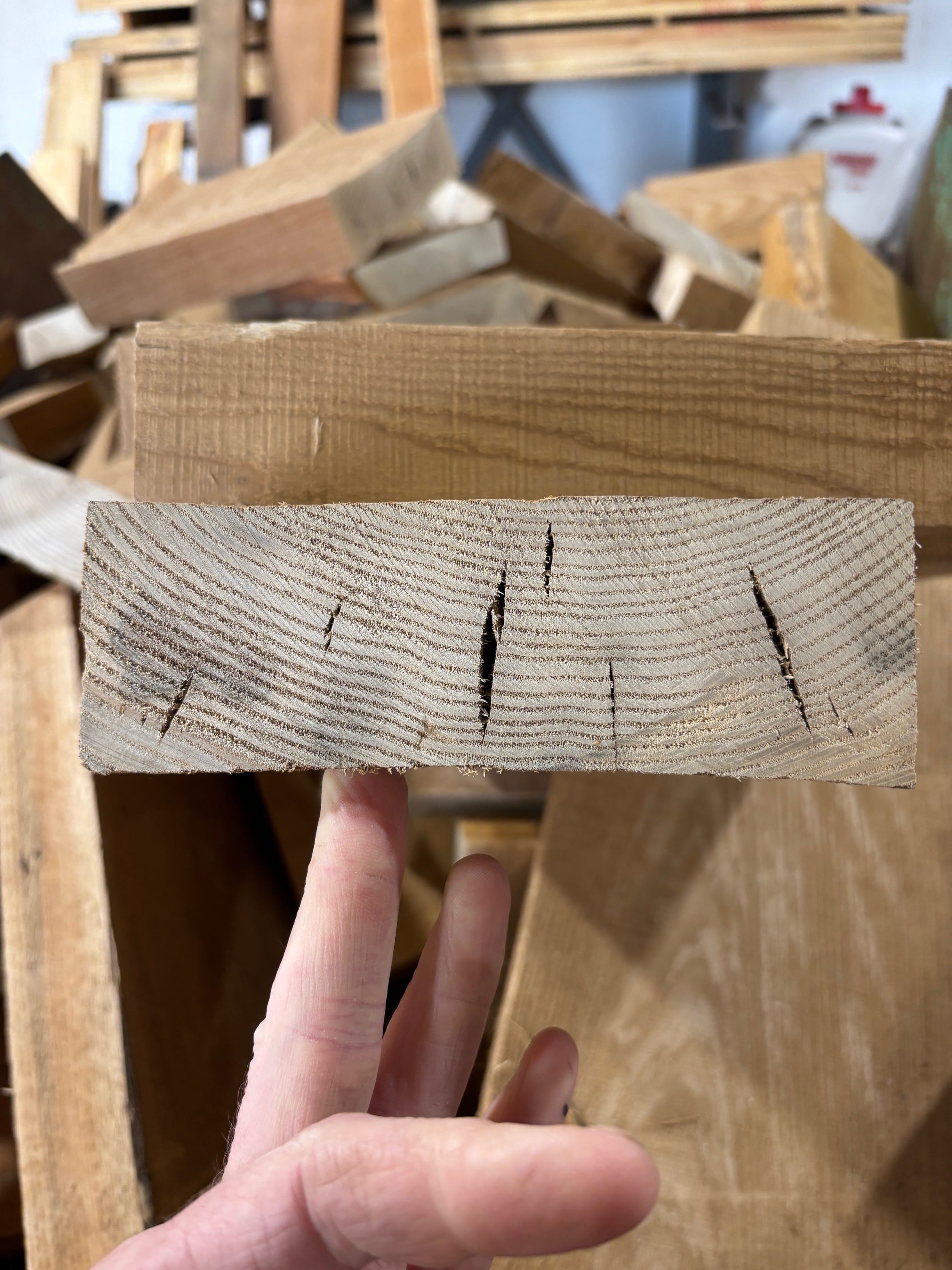
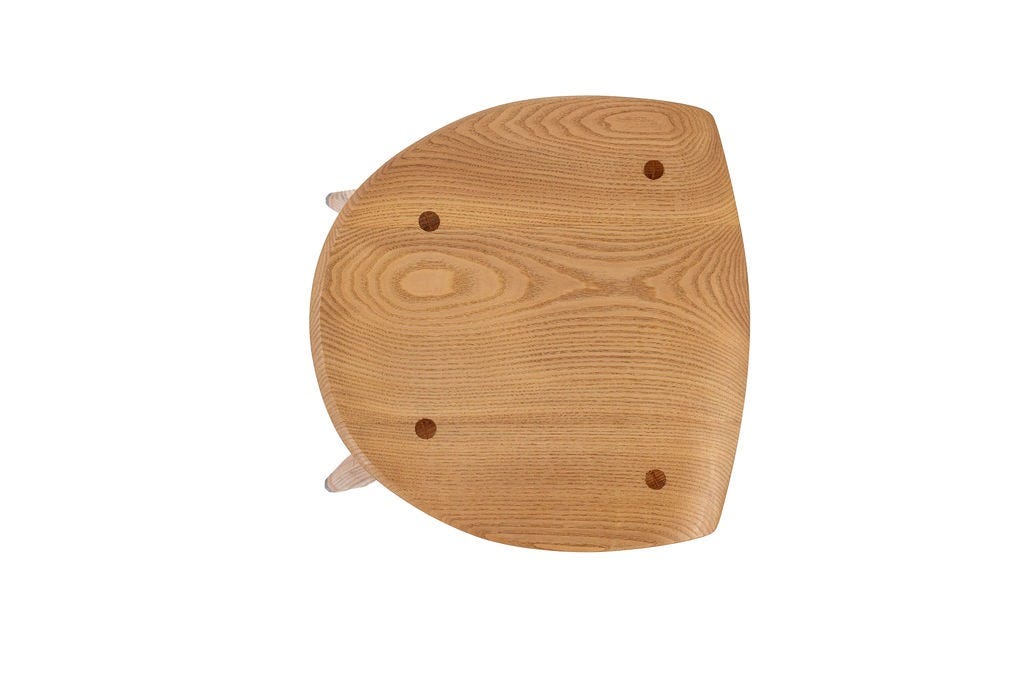
But it makes the most lovely chair seats. And so for the Bench stool material kits which are coming soon I have used all my 8/4 to make 20 kits with sassafras seats.
If you care to make some sassafras tea this summer its really quite simple. Pull a small plant up by the roots and wash the roots thoroughly. Cut them into 1” pieces and boil for 10min in a small pot of water. Remove from the heat and strain adding sugar to taste. You will likely find warning online about drinking it because safrole is a Carcinogen but many studies show the level of safrole is about the same as eating two organic apples (L. S. Gold, et.al., Science, vol. 258, pg 261, 9 Oct 92, “Rodent Carcinogens: Setting Priorities). So as with all things practice moderation, maybe don’t drink a pot a day for months on end.
I worked at a Boy Scout summer camp in southern Indiana for a number of years, including year round as one of the couple people maintaining 650 acres of woods backed up to the Hoosier NF.
Red elm and sassafras will always have a special place in my little midwestern heart.
Sassafras also makes incredible kindling for starting fires, the stuff is so damn oily the twigs are almost waterproof, and when burned goes up like a torch, even if everything else is damp.
I seriously love the stuff, it’s such a cool tree.
Smells like root beer when you work with in in your shop.