
The Bench Stool
An introduction

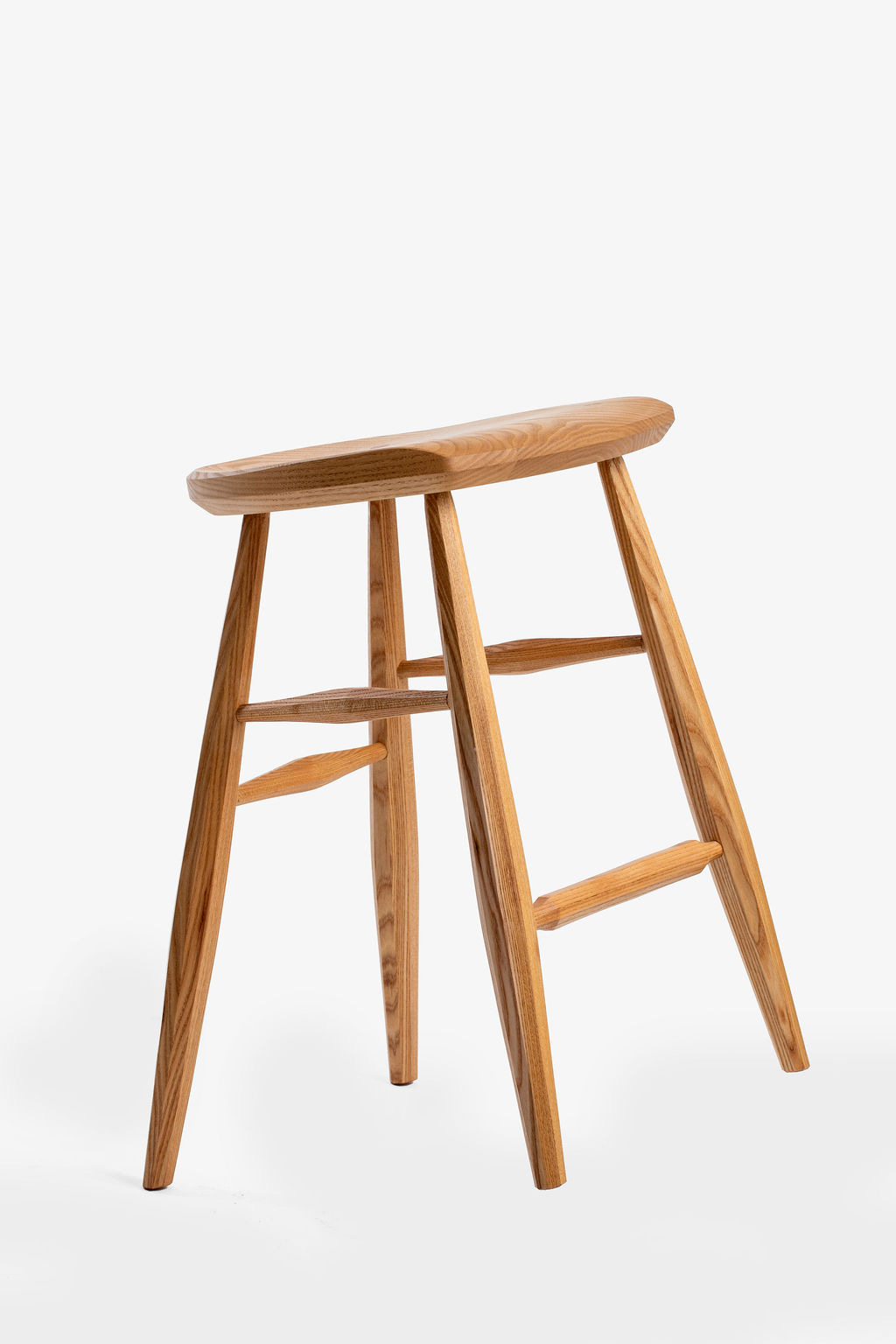
I would like to introduce the second stool design build. But before doing so, I want to remind you of the intentions of this Project and how they influence each of these designs.
Skill accessibility
The first intention of the Stool Project is to take the craft of chairmaking and strip it back to basic tools and hand skills through intentionally designed stools as smaller, more manageable projects than chairs. I could have started with just a board seat with some legs shoved in the bottom; that would have been a respectable baseline, and though I may go back and add a more simplified design, the Hearth Stool was where we started. So each design asks first the questions of tools and hand skills needed, so that building it is accessible to a beginner, and if one starts with the first design and builds them all, then their skills are expanded with each build.
Utility
I find many “beginner” designs void of interesting elements or even practical use, making them ultimately more of an exercise than a useful piece of furniture people will want to build or even use in their home. Keeping this in mind, the second intention I am approaching these designs with is keeping a specific use in mind that I am denoting in their names. A basic utility function for a specific place in the home. The Hearth Stool has three self-balancing legs and sits at the height it does to function well on an uneven hearth in front of the fire.
Vernacular Elements
To make each of the skills learned or honed in making these stools transferable, I am intentionally using vernacular or commonly used elements of design. The tapers, chamfers, joinery, and approach are all things you will find in common vernacular chairs. The goal here is not to push design boundaries or create something unique, but to compile simple methodologies and aesthetics that will mirror other common chair designs a beginner may want to build.